The History of River Edge: A Look Back in Time
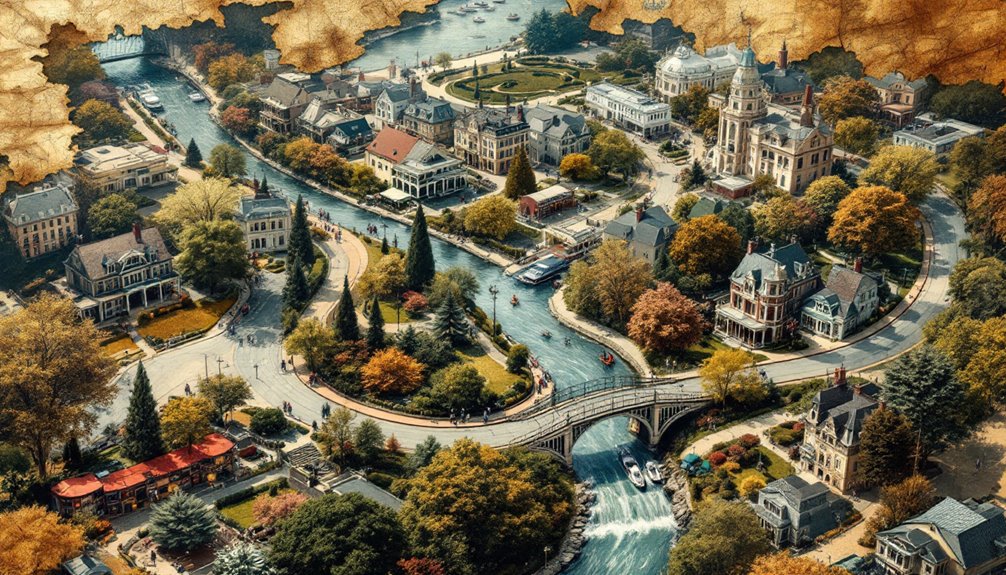
In River Edge, you’ll discover a history enriched by strategic role during the Revolutionary War, highlighted by the pivotal New Bridge and the historic Zabriskie-Steuben House. This house, a military headquarters in 1776, is central to the region’s colonial narrative and showcases Bergen Dutch architecture. The establishment of important infrastructure began with the Hackensack & New York Railroad in 1870. River Edge’s suburban identity blossomed in 1894, when it became Riverside Borough. Schools like Cherry Hill and Roosevelt uphold education quality, while the resilient community has thrived despite natural disasters. Explore further to uncover River Edge’s diverse, evolving community tapestry.
Key Takeaways
- River Edge played a crucial role during the Revolutionary War, with the New Bridge being a significant military site for General George Washington.
- The Zabriskie-Steuben House, built in 1752, served as a military headquarters and is now part of Historic New Bridge Landing Park.
- The Hackensack & New York Railroad’s arrival in 1870 sparked suburban development, enhancing River Edge’s growth and infrastructure.
- River Edge was officially established as the Borough of Riverside in 1894, marking a new phase of local governance and community development.
- River Edge has shown resilience against natural disasters, with significant historical events including the 1954 tornado outbreak and 1952 flood.
Early Agricultural Roots
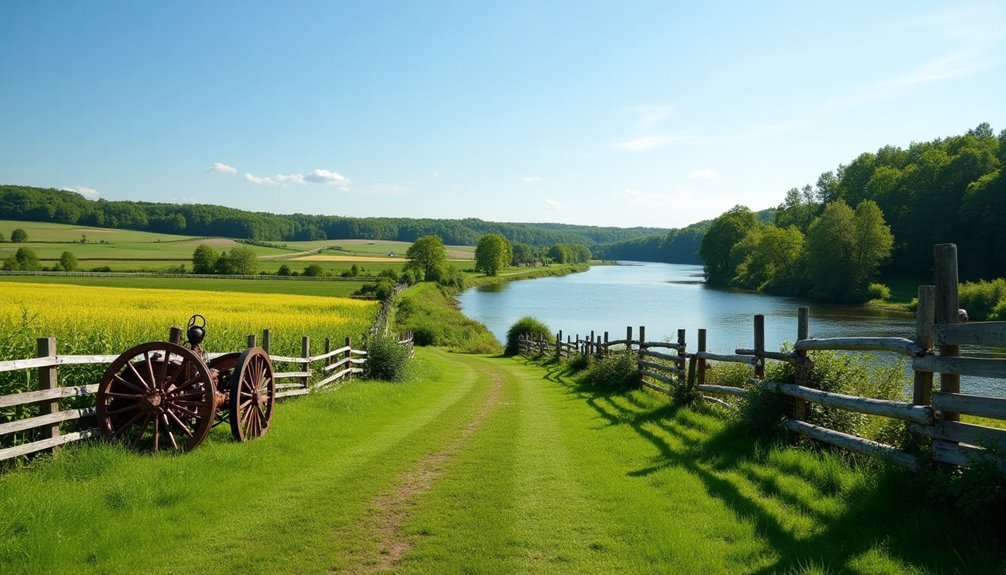
Although River Edge’s early agricultural roots aren’t directly tied to ancient practices, they can be understood through its historical context.
The town’s agricultural activities were significant, with 25% of its land still farmed as late as 1938. This reflects a community deeply connected to its land, despite a population boom between 1930 and 1940 that signaled a shift from agriculture. Additionally, the Hackensack River served as a vital resource for early farming by providing water and transportation for goods.
Early settlers like the Demarests played a key role, establishing a tidal gristmill by 1713. They also engaged in farming, milling, and cottage industries like chair-making and pottery, using local resources such as cattail rushes and clay.
These practices highlight River Edge’s adaptability and resourcefulness, laying a foundation for its rich agricultural heritage.
Industrial Advancements
As River Edge shifted from its agricultural roots, the town’s industrial advancements marked a significant era of growth and transformation. The arrival of the Hackensack & New York Railroad in 1870 spurred suburban development, while the establishment of the Hackensack Water Company’s pumping station in 1874 highlighted essential infrastructural progress.
The King Iron Company’s installation of iron bridges in 1887 and 1889 not only improved connectivity but also earned historical recognition. Economic expansion began with Henry Van Saun’s brickyard in 1811 and the 1892 development of David W. Christie’s farm into building lots by Gustav Peetz. This foundation paved the way for the 1894 opening of the River Edge Hotel and the 1905 formation of the River Edge Land Company, fostering vibrant community growth.
The Zabriskie-Steuben House, a significant colonial heritage site, was preserved by state acquisition in 1928, underscoring the importance of maintaining historical landmarks. Additionally, the community’s proximity to New York City played a crucial role in attracting residents and businesses alike, enhancing the town’s appeal during this transformative period.
Revolutionary War Impact
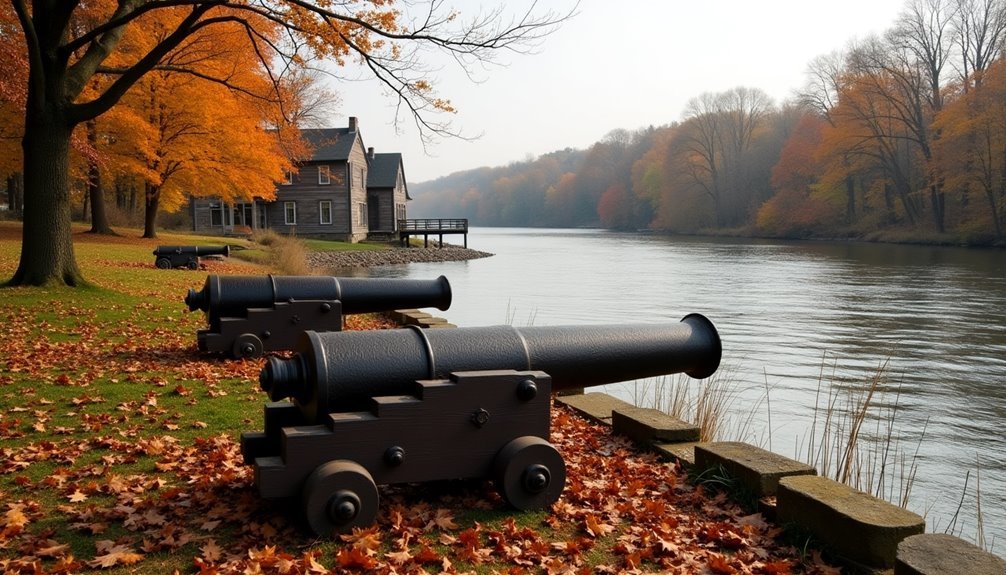
During the Revolutionary War, River Edge played a pivotal role due to its strategic location. The New Bridge, spanning the Hackensack River, became a vital site for military operations. You’d find it fascinating that General George Washington led his troops across this bridge during a retreat in November 1776, an event that inspired Thomas Paine’s iconic words, “These are the times that try men’s souls.” The area was the backdrop for the Battle of the New Bridge, where American forces fought valiantly against the British but suffered heavy losses. Despite setbacks, Washington’s later victories at Trenton and Princeton were turning points. River Edge’s strategic significance in the New York and New Jersey campaign influenced the Revolutionary War‘s outcome. Moreover, the site’s importance was highlighted by the limited number of bridges available in the late 1700s, which significantly impacted military movements and strategies.
Zabriskie-Steuben House Legacy
After the Revolutionary War’s challenges, River Edge’s rich historical tapestry continues with the legacy of the Zabriskie-Steuben House. Built in 1752 by Jan Zabriskie, the house became a notable military headquarters in 1776 and was gifted to Major General Baron von Steuben in 1783. Its Bergen Dutch sandstone architecture, complete with a gambrel roof, stands proudly at New Bridge, a key Hackensack River crossing.
This location was pivotal as it facilitated trade and transport, serving as a bustling activity center during its peak. River Edge, founded in 1894 during the Borough Mania era, reflects the broader trends of New Jersey’s development. Now part of Historic New Bridge Landing Park, it offers guided tours and educational programs. The house’s preservation by the Bergen County Historical Society guarantees its story remains alive.
Incorporation as Riverside

In 1894, the borough of Riverside emerged from a decisive vote by the citizens of River Edge and Cherry Hill, marking a pivotal moment in local governance. With a vote of 37 to 3, the community embraced change, leading to the incorporation on June 30. This shift heralded the election of the first town officials, including Mayor John G. Webb, reflecting a new era of suburban development. Prior to this, the area was rooted in agriculture, with settlers like Cornelius Matthew since 1683. The Hackensack River, pivotal to its identity, supported military activities during the American Revolution and influenced development with the 1870 railroad.
The incorporation laid foundations for future growth, fostering a legacy celebrated in landmarks and educational institutions. Additionally, River Edge’s high-quality education continues to play a vital role in attracting families to the area. The transformation of River Edge from its early days as Riverside to its modern identity is a testament to its rich history and dynamic evolution.
Suburban Growth Post-War
As the dust settled from World War II, River Edge transformed into a bustling suburban haven, driven by a surge in infrastructure and housing developments. The extension of the Hackensack & New York Railroad, along with new bridges and roads, widened Kinderkamack Road, facilitated easier transportation and growth. The emergence of community facilities, such as the new borough hall, further anchored this expansion. Residential areas flourished as farmland gave way to developments like the Clarendon Estates. Colonial, Cape Cod, and ranch-style homes dotted the landscape, reflecting the era’s architectural trends. This growth was supported by the community’s strong sense of community, which attracted families and professionals alike.
| Feature | Example |
|---|---|
| Transportation | Bascule bridge installation |
| Residential Development | Clarendon Estates by Charles Reis |
| Community Facilities | New borough hall on Kinderkamack Rd |
| Housing Styles | Reis Colonials, Cape Cod, Ranch |
River Edge’s post-war growth truly reshaped its suburban identity.
Educational Institutions
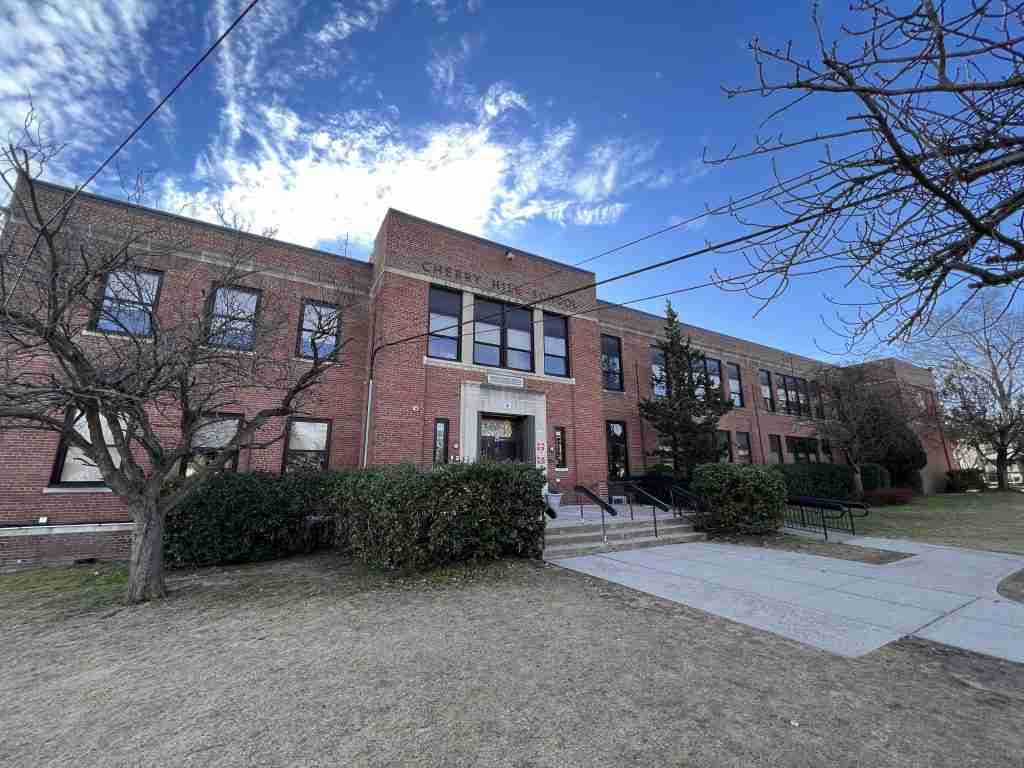
Although River Edge has transformed over the decades, its dedication to education remains steadfast.
The River Edge Elementary School District serves pre-kindergarten through sixth grade, with Cherry Hill School and Roosevelt School accommodating over a thousand students combined. Cherry Hill School, opened in 1949, and Roosevelt School, established in 1919, highlight the community’s commitment to educational growth. Both schools have expanded over the years, signifying their enduring importance.
In 1958, the shared River Dell Regional School District was established, offering secondary education for River Edge and Oradell students. The district boasts a low student-teacher ratio of 11.8:1, ensuring quality education.
Cherry Hill School’s Blue Ribbon Award in 1998-99 exemplifies the district’s educational excellence, reflecting community pride and achievement.
Demographic Shifts and Expansion
As River Edge continues to expand, its demographic landscape is shifting in intriguing ways. The town’s population is projected to reach 12,019 by 2025, reflecting a modest increase from 11,995 in 2023. Since 2010, River Edge has seen a 9.37% growth, with a current density of 6,457 people per mile.
The community is quite diverse, with White residents making up 55.2%, followed by Asians at 29.9%, and Blacks or African Americans at 5.22%. Hispanic residents account for 8.7%.
The median household income has risen to $155,827 in 2023, showing steady economic growth. With 4,389 households, nearly 40% have children, indicating a family-friendly atmosphere.
These shifts highlight a vibrant, evolving community rooted in rich history and cultural diversity.
Frequently Asked Questions
How Did River Edge Get Its Current Name?
River Edge got its name on December 1, 1930, when the borough shifted from its original name, Riverside.
This change was inspired by its scenic location along the Hackensack River, which plays a pivotal role in the community’s identity.
This move marked a new chapter, reflecting the town’s evolving character and deep connection to its natural surroundings.
The name encapsulates both the borough’s rich history and its forward-looking spirit.
What Are Some Famous Residents From River Edge?
You’ll find that River Edge boasts several famous residents. Mickey Mantle and Joe Pepitone, both New York Yankees players, called this town home due to its proximity to Yankee Stadium.
Historical figures like Cornelius Matthew, the first European settler, and General George Washington, who used the Steuben House during the American Revolution, also have ties here.
River Edge’s rich history and strategic location have drawn notable individuals throughout its past.
Are There Any Annual Cultural Festivals in River Edge?
You’ll find several annual cultural festivals in River Edge that celebrate the community’s diversity and creativity.
The Cherry Hill & Roosevelt Art Show showcases student artwork, running through February.
Celebrate your summer with the 4th of July Parade and Carnival, a cornerstone event filled with activities.
As autumn arrives, don’t miss the Autumn Acoustics Music Festival, offering indie and folk music, food trucks, and family-friendly fun at Riveredge Nature Center.
What Role Did River Edge Play in Local Politics Historically?
River Edge, historically significant in local politics, was incorporated as Riverside in 1894.
Early leaders like Mayor John G. Webb and councilmen set the foundation for governance. The borough adopted New Jersey’s “weak mayor / strong council” system, strengthening the council’s legislative role.
Notable figures, such as Albert Z. Bogert and Elmer F. Howell, shaped political shifts, including the name change to River Edge in 1930, underscoring its evolving political landscape.
How Have Transportation Developments Influenced River Edge’s Growth?
Transportation developments have greatly influenced River Edge’s growth. Railroads, such as the Hackensack & New York Railroad extension, spurred suburban development by enhancing connectivity.
Post-World War II road expansions transformed accessibility, promoting rapid suburbanization. The shift from rail to road and the introduction of the Interstate Highway System further boosted development.
These advancements have shaped River Edge into a well-connected community, increasing its appeal for residential and business growth.
Bottom Line
You’ve journeyed through River Edge’s rich history, witnessing its transformation from agricultural roots to a thriving community. The area has seen industrial advancements, weathered the Revolutionary War, and preserved landmarks like the Zabriskie-Steuben House. Its incorporation as Riverside marked a new era, bolstered by educational institutions and resilient responses to natural disasters. With its parks and recreational spaces, River Edge continues to evolve, reflecting demographic shifts and expansions that celebrate both its historical legacy and promising future.