DIY Plumbing Fixes Every Homeowner Should Know
As a homeowner, knowing how to tackle basic plumbing issues can safeguard your home and conserve water. Leaky faucets, often caused by worn washers, and running toilets, typically due to faulty flapper valves, dramatically increase water bills. Mastering simple repairs, like tightening connections with an adjustable wrench or using plumber's tape for leak-proof seals, is invaluable. Slow or clogged drains need regular cleaning to prevent blockages; a common frustration caused by hair and food particles. Regular water heater maintenance, such as flushing sediment, guarantees longevity and efficiency. These essential skills enhance home safety and save costs, while thorough tips await further exploration.
Key Takeaways
- Use a pipe wrench to tighten leaky faucets and prevent water waste.
- Flush water heaters annually to remove sediment and ensure efficiency.
- Apply plumber's tape to secure leak-free seals on pipe joints.
- Clean drains monthly to prevent clogs caused by hair and debris.
- Shut off the main water supply immediately if a burst pipe occurs.
Common Plumbing Issues
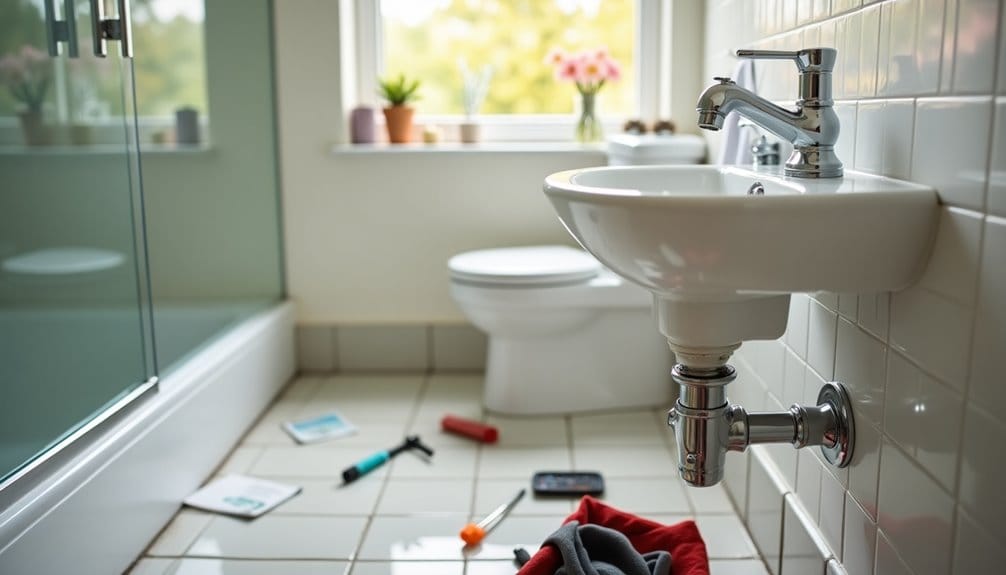
When dealing with common plumbing issues, understanding the root causes can save you time and frustration.
Clogged drains often happen because of hair, grease, or food particles that accumulate over time. You can tackle these blockages using a plunger or a drain snake. Regular cleaning helps prevent these nuisances.
Leaky faucets are another frequent problem, usually due to worn-out washers or high water pressure straining components. An average faucet leak can waste over 3,000 gallons of water annually, so timely repairs are crucial to prevent water wastage and increased bills. High water pressure can exacerbate the wear and tear on faucet components, eventually leading to leaks if not addressed.
Running toilets often stem from faulty flapper valves, so regular inspections can catch these before they worsen.
Low water pressure might indicate pipe corrosion or leaks, while issues with your water heater, like strange noises, often point to sediment buildup.
For severe problems, don't hesitate to call a professional plumber to guarantee your home's plumbing runs smoothly.
Essential Plumbing Tools
Maneuvering plumbing repairs at home becomes significantly easier with the right tools in your arsenal.
A pipe wrench is indispensable for tightening and loosening nuts on pipework, while an adjustable wrench adapts to different sizes of nuts and bolts. For those tricky faucet spaces, a basin wrench reaches into narrow gaps. Proper tool alignment is crucial to prevent damage to pipes and fittings during repairs.
Pliers offer a firm grip on various nuts, bolts, and pipes, and a deburring tool smooths out sharp edges on cut pipes. For pipe work, a hacksaw and tube or plastic pipe cutters handle cutting duties, complemented by an internal PVC pipe cutter for hard-to-reach areas.
Safety tools like goggles and gloves protect you during tasks, and a stubby screwdriver helps with tight spaces. Regular maintenance of your tools will extend their lifespan, ensuring they remain effective over time.
Equip yourself thoughtfully, and plumbing becomes manageable.
Identifying Hidden Leaks
Having the right plumbing tools is just the start; the skills to identify hidden leaks can save you from future headaches and costly repairs.
Recognizing the signs of hidden leaks is essential for any homeowner. Look out for these common indicators:
- Unexplained water bill increases hint at potential hidden leaks.
- Damp spots on walls or floors point to hidden water leaks.
- The sound of running water when taps are off suggests a hidden leak.
- Mold or mildew growth may indicate persistent dampness from a hidden leak.
- Water stains on ceilings, walls, or floors often signal a hidden water leak.
To confirm suspicions, employ methods like the water meter test or infrared cameras. Early detection of leaks not only helps in minimizing water waste but also prevents structural damage to your home's foundations, walls, and ceilings. Regular inspections of pipes, faucets, and toilets are essential for preventing future clogs and identifying leaks early. These techniques help detect leaks before they cause significant damage, preserving your home's integrity.
Leak and Clog Solutions
Fixing leaks and clearing clogs are essential skills for any homeowner aiming to maintain a healthy plumbing system. For leaks, you can start with temporary solutions like pipe clamps, epoxy putty, or rubber tape to quickly seal minor issues. Pipe repair kits from hardware stores are also handy for short-term fixes. For a more durable repair, use pipe sleeves or rubber patches. Confirm the area is clean and dry, then fit the sleeve snugly over the leak. Rubber patches work well for PVC or cast iron pipes when secured with hose clamps. Additionally, regular inspection of plumbing fixtures can prevent major leaks. For clogs, avoid harsh chemicals. Use a plunger or drain snake to dislodge blockages, and regularly clean drains to prevent buildup. Employ drain screens and run hot water to keep pipes clear. To prevent mineral buildup, consider installing a water softener to reduce limescale that can catch debris in your pipes.
Water Heater Care
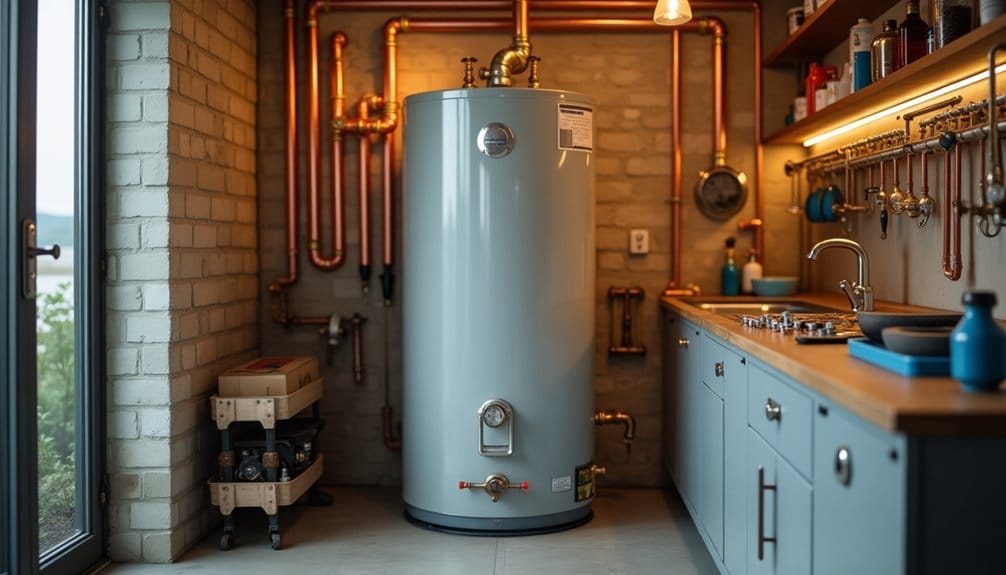
As you tackle plumbing tasks, making certain your water heater is in prime condition becomes just as important.
Regular maintenance prevents sediment buildup, rust, and corrosion, which can hinder efficiency and pose safety risks. A well-maintained heater provides reliable access to hot water, ensuring comfort and convenience in your daily routine. Regular checks can prevent premature failure and costly replacements, extending the lifespan of your water heater beyond the average 8-10 years.
Perform essential tasks at least once a year. Here's what to include in your routine:
- Flushing the Tank: Drain sediments every 6-12 months to maintain efficiency.
- Testing the Pressure-Relief Valve: Lift the valve; replace it if it doesn't release water.
- Replacing the Anode Rod: Check for corrosion and replace if necessary to prevent tank damage.
- Tightening Electrical Connections: Make certain all connections are secure.
- Visual Inspections: Look for leaks or wear on the heater and pipes.
These simple steps keep your water heater running smoothly and safely.
Enhancing Water Quality
Have you ever wondered how to guarantee your home's water is as clean and safe as possible? Start by testing your water regularly with kits to identify contaminants. Evaluate if any issues stem from the municipal supply or your home's plumbing.
Check the pH level to confirm it's safe, and analyze mineral content, focusing on calcium, magnesium, and iron. Don't forget bacterial contamination checks to safeguard against harmful microorganisms.
Install whole-home filtration systems for extensive protection, and consider reverse osmosis systems for specific faucets. Maintain filters diligently, replacing them as needed to keep them effective.
Activated carbon filters are great for removing chlorine and lead, while UV purification systems can kill bacteria. For softer water, install a water softener to remove calcium and magnesium.
Valve Replacement Tips
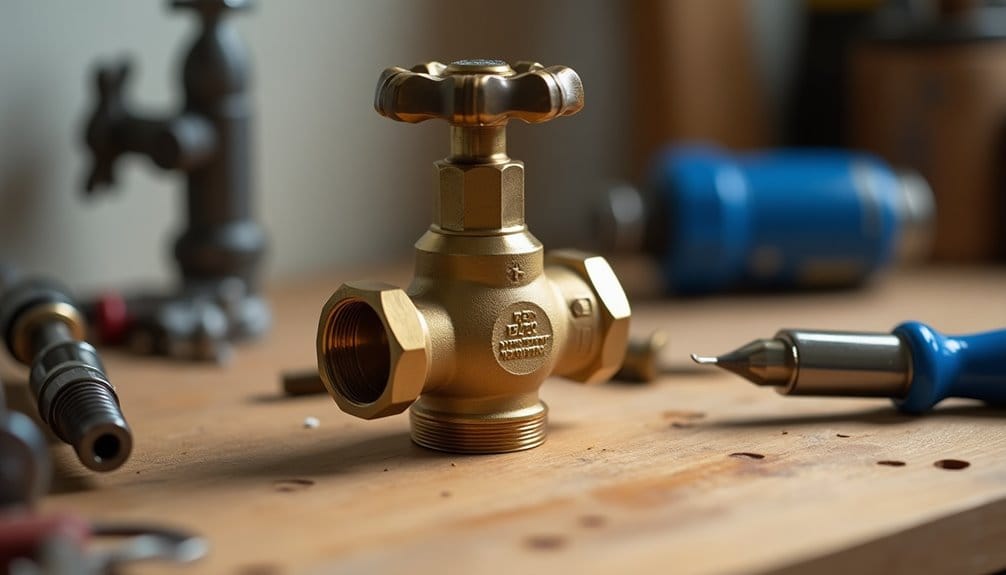
Ensuring high-quality water quality often involves addressing plumbing components that directly affect flow and safety, such as valves. When replacing a valve, careful preparation is key.
Start by turning off the main water supply to prevent accidental flow. Follow these steps:
- Drain the pipes: Open the stop valve and let water drain into a bucket.
- Gather your tools: Mini hacksaws, adjustable wrenches, and pliers will be essential.
- Wear protective gear: Gloves and safety glasses are a must.
- Identify the valve type: Ensuring the right replacement parts is vital.
- Cut and clean pipe ends: Use a mini hacksaw, then buff with emery cloth.
After removing the old valve, install the new one, ensuring it's leak-free by testing it thoroughly.
Emergency Plumbing Tips
When disaster strikes, are you prepared to handle a plumbing emergency? Knowing the right steps can save your home from extensive damage.
If you encounter burst or leaking pipes, shut off the main water supply immediately. Use buckets, towels, or waterproof tape to contain leaks, preventing further harm.
For clogged drains, clean them regularly to avoid accumulation caused by hair, food particles, and grease.
In the event of a water heater issue, turn it off to prevent pressure buildup. Activate faucets to drain the plumbing system if the main water line breaks.
Remember, some issues, like major leaks or sewer backups, require professional help to guarantee safety and proper resolution.
Familiarize yourself with these tips to tackle emergencies effectively.
Frequently Asked Questions
How Can I Silence Noisy Plumbing Pipes?
To silence noisy plumbing pipes, start by tightening any loose pipe clamps, which can reduce rattling.
Insulate your pipes to minimize vibration and noise.
Consider installing water hammer arrestors to absorb shock waves and eliminate banging sounds.
If high water pressure is the culprit, adjust it to a lower setting.
Finally, clear any clogs that might be causing gurgling noises.
These steps should help maintain a quieter plumbing system.
What's the Best Way to Insulate Pipes?
To insulate pipes effectively, start by measuring them accurately to guarantee a snug fit for insulation materials.
Foam pipe sleeves are ideal for most projects, offering easy installation and good insulation. For irregular shapes, foam tape works well.
In high-temperature areas, consider fiberglass wrap, but remember it requires protective gear. Rubber insulation provides moisture resistance, though it may be tricky to install.
Always clean pipes before applying insulation for best results.
How Do I Fix Low Water Pressure Issues?
Did you know that 10% of homes have leaks that waste 90 gallons or more per day?
To fix low water pressure, start by checking for blockages in pipes, aerators, and the main water valve. Remove clogs with a plumbing snake, and clean or replace aerators.
If pressure remains low, inspect your pressure regulator and water heater. Regular maintenance prevents issues, but consult a plumber for persistent problems or complex repairs.
Can I Install a Bidet Myself?
Yes, you can install a bidet yourself, especially if you choose a bidet toilet seat attachment.
It's more DIY-friendly than a standalone bidet, requiring basic tools like an adjustable wrench and screwdriver.
You'll need to turn off the water supply, attach a T-connector, and secure the bidet.
Use Teflon tape to prevent leaks, and test the setup thoroughly.
If you encounter issues, consider seeking professional help to guarantee proper installation.
How Do I Winterize Outdoor Faucets?
To winterize outdoor faucets, start by locating the interior shut-off valve, usually behind the faucet.
Turn the valve clockwise to stop the water supply.
Detach and drain hoses, storing them indoors.
Open the faucet to drain remaining water, using a bleeder cap for complete drainage.
Insulate the faucet with covers or foam, ensuring it's tightly secured.
Check for leaks, using Teflon tape if needed, and inspect pipes for protection against freezing.
Bottom Line
You've now got the skills to tackle common plumbing issues, from fixing leaks to maintaining your water heater. Imagine this: a neighbor calls in a panic about a leaking pipe. Equipped with your newfound knowledge, you confidently assist, stopping the leak before it causes damage. By mastering these essential DIY fixes, you not only save money but also foster a sense of community pride. Remember, every tool in your kit empowers you to keep your home running smoothly.